
[Xinjiang Juteng Steel Structure Products Co., Ltd.] Rock wool sandwich panels fully leverage the excellent conventional properties of the rock wool core material, demonstrating significant effects in fire resistance, thermal insulation, sound absorption, and sound insulation. Their specifications, models, and styles are also rich and diverse, providing users with a wide range of choices. When purchasing and using them, users should closely combine their actual engineering needs and specific application scenarios to carefully select the appropriate dimensions and parameters. We provide the following parameters for your reference when selecting materials.
Steel plate specifications: As the framework of the panel, the thickness of the outer plate usually ranges from 0.5mm to 0.8mm, while the thickness of the inner plate is generally within the range of 0.4mm to 0.6mm. The steel plate surface usually undergoes galvanization or aluminum-zinc plating treatment to enhance its corrosion resistance, and its yield strength is generally required to be greater than 300 MPa to ensure structural stability.
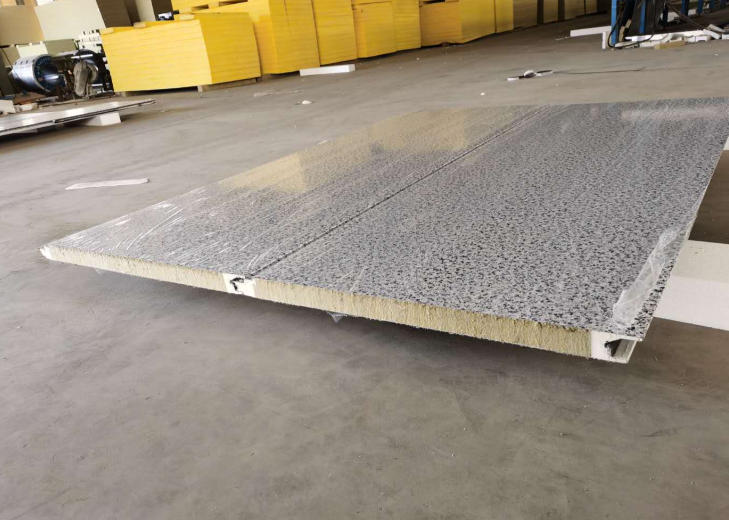
When rock wool sandwich panels are used for building exterior walls, to ensure their safety and durability during long-term use, the thickness of the outer steel plate should not be less than 0.5mm, and the total thickness of the finished panel should also not be less than 50mm. Steel plates that are too thin may lead to deformation or scratches during transportation, installation, or use, thereby causing quality issues. At the same time, the overall thickness of the panel is the core factor determining its thermal insulation performance; generally speaking, the greater the product thickness, the higher its thermal resistance value, and naturally, the better the insulation effect.
When applied to roofing with the intention to install a photovoltaic system, higher requirements are placed on the load-bearing capacity and long-term stability of the panels. It is recommended that the thickness of the finished panel should be at least around 100mm; if the thickness is too thin, its structural strength and thermal insulation performance may not meet the usage needs under long-term loads and harsh environments. If the density of the core material is also at a low level at this time, the overall performance of the panel will be even weaker, making it prone to structural safety risks under the long-term action of complex stresses such as the weight of photovoltaic modules, wind pressure, and loads.

